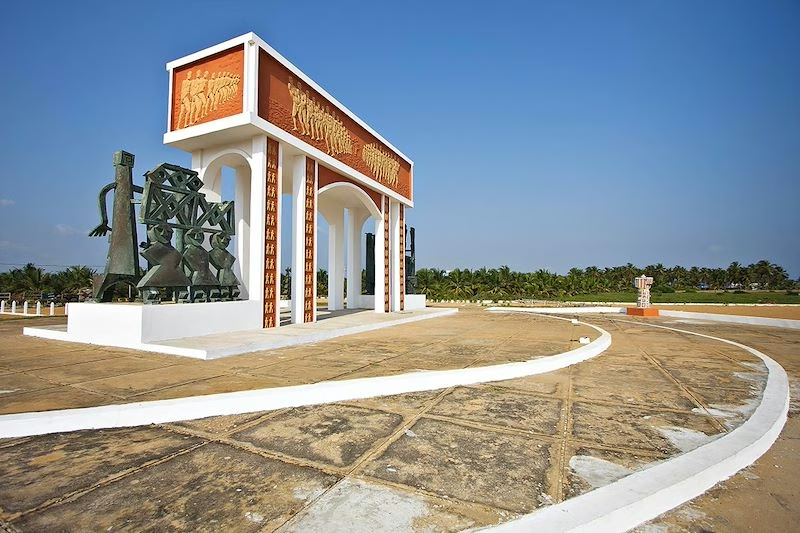
The Door of No Return
CROSSING THE THRESHOLD OF MEMORY
A monument that speaks to the world
In Ouidah, a city with a past both rich and painful, stands one of the most powerful symbols of universal memory: the Door of No Return. Erected on the beach that once marked the departure point of hundreds of thousands of men and women reduced to slavery, this monumental memorial is far more than a stone arch facing the Atlantic. It is a silent cry, a permanent reminder, an invitation to reflection.
"When I guide a group here, I always tell them:
look at the sea, and imagine what those who had no idea where they were being taken must have felt."
A sensory and introspective experience
Standing before the Door of No Return is to be seized by a unique emotion. The sea wind lashes the face, the sound of the waves accompanies each step, the horizon seems infinite. Every visitor becomes a witness to an absence: that of millions of beings torn from their lands.
By day, the light illuminates the whiteness of the columns, recalling the harshness of forced departures. At sunset, the silhouette of the door is outlined against a blazing sky: a moment of fragile beauty where the past dialogues with the present.
History carved in stone
The Door of No Return was inaugurated in 1995 during the World Festival of Vodun Arts and Cultures. Designed by Beninese artist Fortuné Bandeira, it was created with the support of UNESCO as part of the “Slave Route” project.
Its architecture is both imposing and symbolic:
The central arch, facing the ocean, represents the threshold crossed by enslaved people before embarking toward the unknown.
The bas-reliefs carved on the pillars evoke the endless lines of captives, chained and driven toward the sea.
The motifs recall African art and spirituality, linking the painful history of the slave trade to the strength of cultures that survived and transformed.
Crossing the threshold of awareness
Visiting the Door of No Return means choosing to step beyond conventional tourism. It is an experience that speaks to both the senses and the conscience: the sea, the wind, the stone, the voices of past and present. For our guests, it is an invitation to enjoy a stay that combines hospitality, culture, and responsibility. For in Ouidah, memory is not frozen. It is lived, shared, and it illuminates the future.