Native Hotels
In the heart of Ouidah’s Museum-City, Native Hotels offers a true haven of peace in carefully restored colonial houses. This exceptional setting elegantly blends historical heritage with contemporary comfort.
Our rooms and suites are true cocoons of serenity, designed to envelop each guest in a soothing and refreshing atmosphere. Whether seeking tranquility or on a business trip, you will receive personalized attention in an environment conducive to relaxation. Every detail contributes to making your stay a memorable experience, combining pure relaxation, cultural immersion, and authentic discoveries.
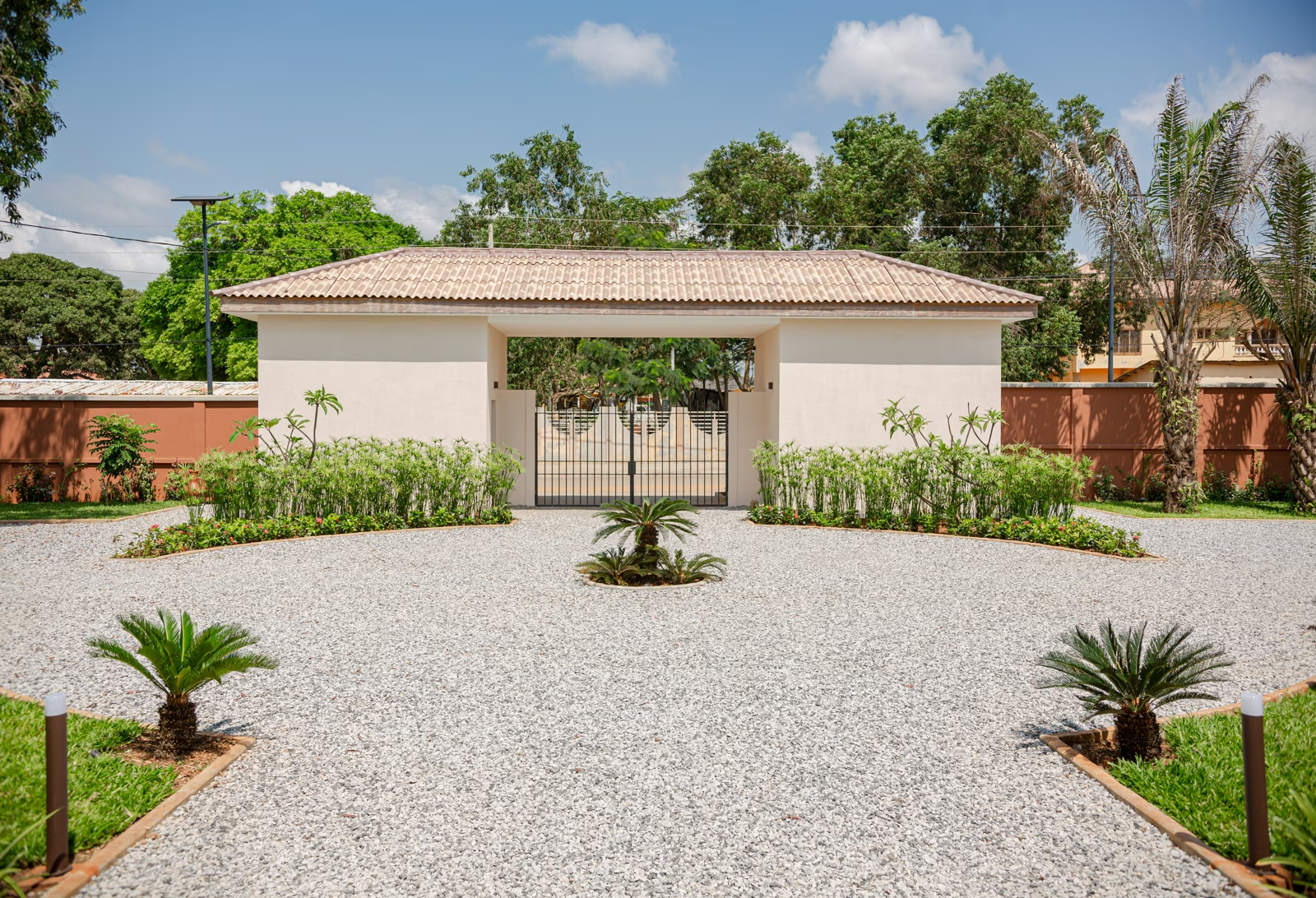
The Circle Commander’s Residence
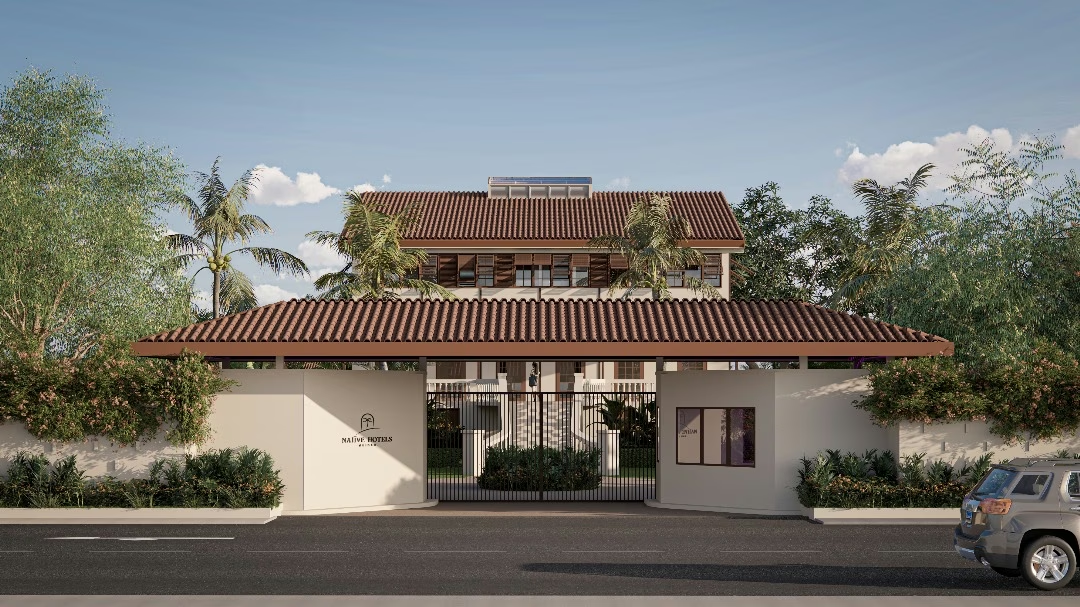
History of the building
A jewel of colonial architecture in Ouidah, the Circle Commander’s residence was built between 1890 and 1895. Its prefabricated iron framework, baked clay brick walls, solid wooden doors, wooden louvered windows, wooden paneled ceiling, external reinforced concrete stairs, internal metallic stairs with wooden railings, etc., are all characteristic of colonial architectural design.
The upper floor served as the residence while the ground floor was used as offices for the Commander until 1930, when administrative activities moved to a building across the street. From 1960, after the departure of the last French Commander, the building served as official housing for about twenty mayors (1960–1972), district chiefs (1975–1990), urban district chiefs (1991–2003), before being abandoned. Administrative archives were stored there until 2024.
© Dr Sylvestre EDJEKPOTO
Historian, Urban Planner, Specialist in Cultural Heritage and Tourism of Memory Cities
The Circle Commander’s Office
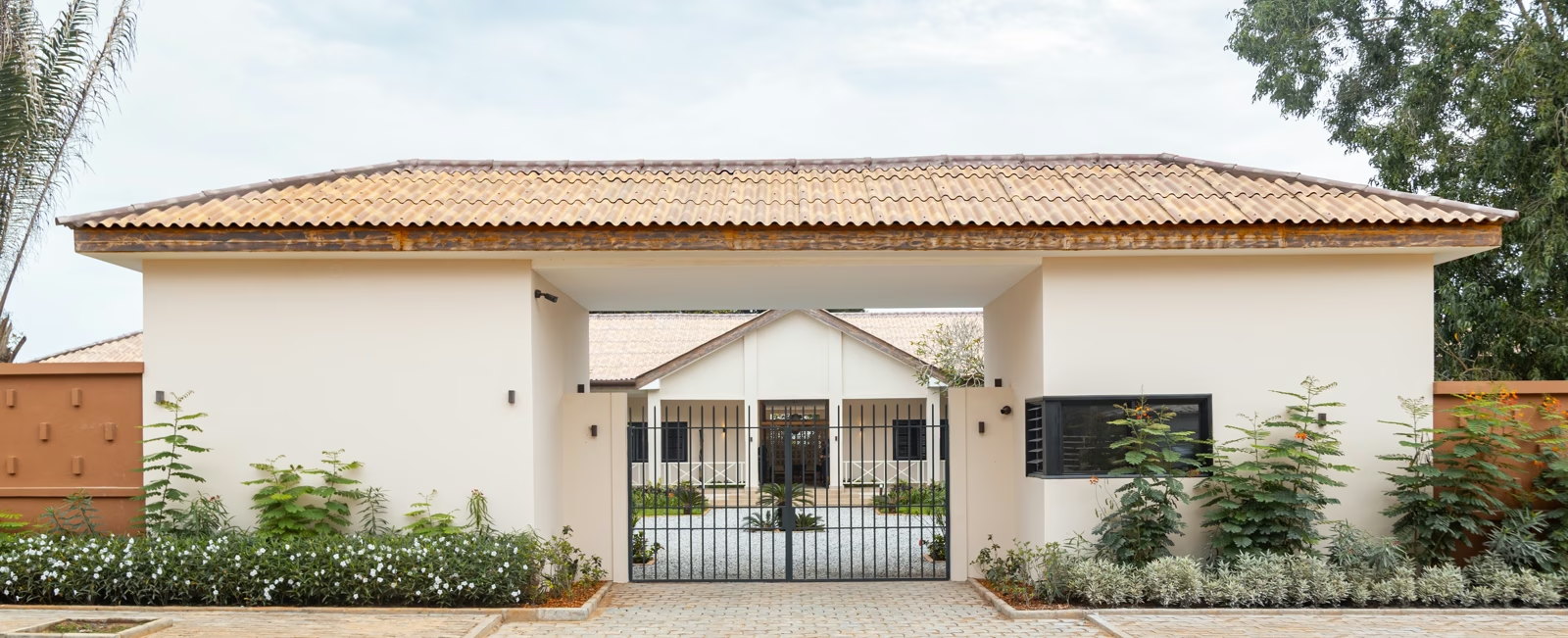
History of the building
Built in 1930 with terracotta blocks and cement coating, the building features a wooden and reinforced concrete structure, a tiled roof, and wooden flooring.
A large gallery surrounds the building and protects it from sun exposure. Double-opening shutters ensure ventilation for the entire structure, enclosed by modular cement elements.
The building successively served as offices for the Circle Commander (1930–1960), offices for various administrative services (1960–1988), offices for the Agricultural Product Price Control Service (1988–1990), an artistic exchange center and artists’ residence (1994 after restoration works), and annex offices for the Ouidah First Instance Court (2002). From 2003 to 2023, it was occupied by the Technical Services Department of the Ouidah City Hall.
© Dr Sylvestre EDJEKPOTO
Historian, Urban Planner, Specialist in Cultural Heritage and Tourism of Memory Cities
Villa Saint-Georges
History of the building
Built in Afro-Brazilian style, its construction was completed around 1940. With a terracotta foundation topped with raw brick walls, Villa Saint-Georges initially had a wooden structure with corrugated sheets. A period well, with a highly crafted rim, hand-dug, was the household's only water source. Villa Saint-Georges has primarily served residential purposes, from its construction by an Afro-Brazilian family to its restoration and conversion into a hotel property.
© Dr Sylvestre EDJEKPOTO
Historian, Urban Planner, Specialist in Cultural Heritage and Tourism of Memory Cities