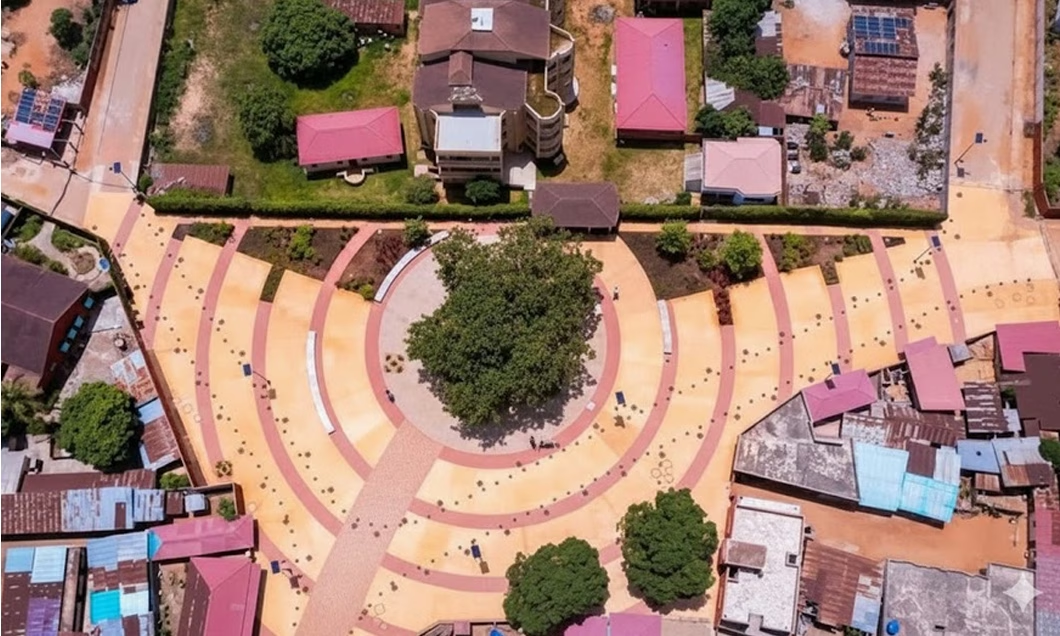
Place Tchatcha
WHEN HISTORY IS TOLD TO THE RHYTHM OF DRUMS
The history of Place Tchatcha
Place Tchatcha is known as one of the major sites
linked to the transatlantic slave trade. It corresponds to
the former slave market, where captives were
gathered, traded, and sold before being led
along the Slave Route toward the beach.
Today, the square has been transformed into a
memorial and cultural space. Monuments and steles
recall the magnitude of the tragedy, yet life continues
vibrantly: festivals, Vodun dances, community
ceremonies. This contrast makes Tchatcha a
unique place: both a site of memory and a space of
renewal.
An emblematic place of Ouidah
In the heart of Ouidah, a city marked by the memory of
the slave trade but also by a unique cultural vitality,
Place Tchatcha unfolds. It is here that, for centuries,
the popular soul of the city has resonated:
a gathering place where music, rituals, and memories
intertwine.
More than an urban space, Tchatcha is a living stage
where the history of Ouidah is performed, between
painful memory and creative energy. For visitors of
Native Hotels, it is a direct immersion into the
cultural pulse of the city.
A visual and sensory experience
Visiting Place Tchatcha means living an experience
that engages all the senses:
Sight: commemorative bas-reliefs and sculptures,
colorful frescoes, silhouettes of masked dancers
during celebrations.
Hearing: the percussions that give the square its
name “tchatcha”, a traditional instrument made of
gourds filled with seeds or pebbles, setting the rhythm
of ceremonies and accompanying the drums.
Smell: air mixed with dust, incense, and sometimes
spices sold by nearby merchants.
Touch: the roughness of stone underfoot,
the warmth of clasped hands, the movement
of colorful fabrics.
Taste: that of a bissap or akassa enjoyed
in the shade after the visit, a reminder that culture is
also passed on through food.